

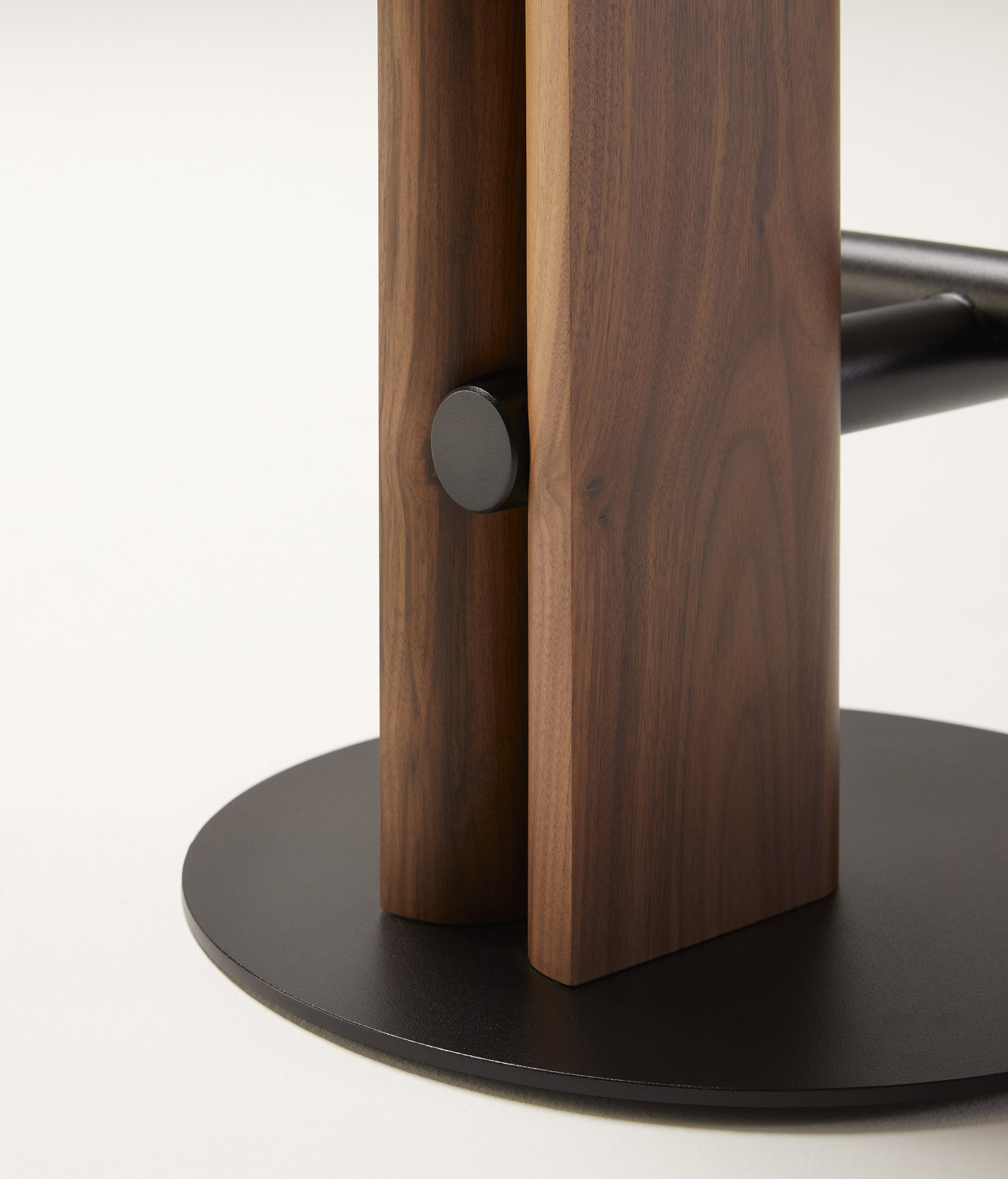
Rook Stool is a considered collection of stools, subtly inspired by the decorative forms of traditional chess pieces. The diverging timber uprights interplay with the horizontal footrest, encapsulating and supporting the element. The steel skeleton within the solid timber form, minimises the overall silhouette, celebrating the beautiful marriage of natural solid timber and Australian craftsmanship.

Rook
Stool
Rook
Stool
Rook Stool is a considered collection of stools, subtly inspired by the decorative forms of traditional chess pieces. The diverging timber uprights interplay with the horizontal footrest, encapsulating and supporting the element. The steel skeleton within the solid timber form, minimises the overall silhouette, celebrating the beautiful marriage of natural solid timber and Australian craftsmanship.

PITAMBARI NEELAM
The gently radiused curves of the seat and leg provide a consistent element throughout the range. Presented in solid walnut, white oak and blackened oak with base and footrest finished to textured black. The Rook Stools are made and assembled in Australia and available in three heights as well as an upholstered top option to suit a range of indoor contexts.
PITAMBARI NEELAM
PITAMBARI NEELAM
PRICE : 2,96,000/- RS.
-
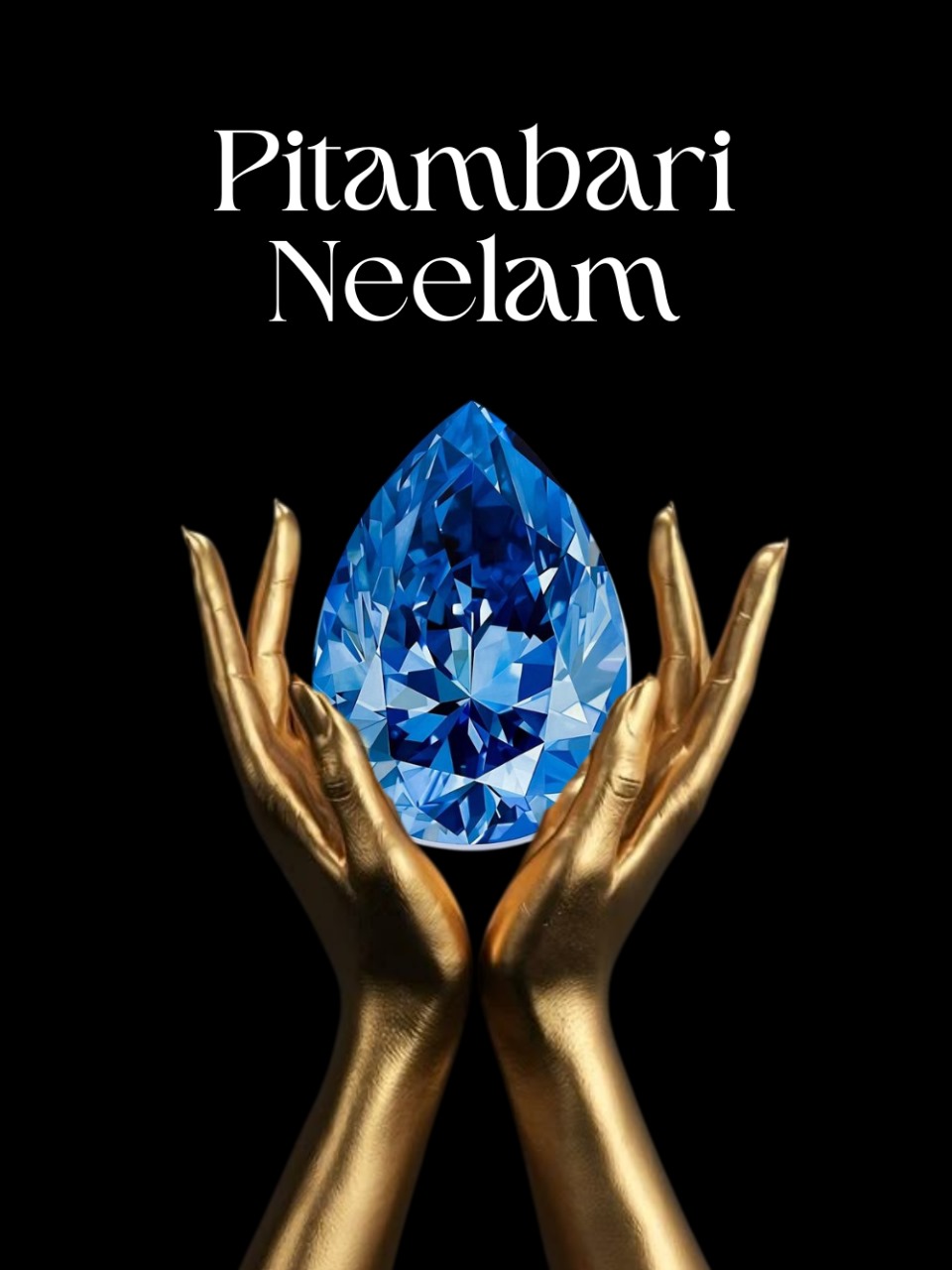
Pitambari Neelam, also called Neelambari, is a rare bi‑color sapphire combining blue sapphire (Neelam) and yellow sapphire (Pukhraj). It carries the astrological energies of both Saturn (Shani) and Jupiter (Guru), making it spiritually significant in Vedic astrology
-
Typically sourced from Sri Lanka (Ceylon)—renowned for its clarity and vibrant dual-tone sapphires—it may also originate from Myanmar, Thailand, India, and Brazil
-
Corundum family gem, with a Mohs hardness of 9, refractive index around 1.76–1.78, and specific gravity 3.95–4.03
Specification
PITAMBARI NEELAM
PRICE : 2,96,000/- RS.
-
Pitambari Neelam, also called Neelambari, is a rare bi‑color sapphire combining blue sapphire (Neelam) and yellow sapphire (Pukhraj). It carries the astrological energies of both Saturn (Shani) and Jupiter (Guru), making it spiritually significant in Vedic astrology
-
Typically sourced from Sri Lanka (Ceylon)—renowned for its clarity and vibrant dual-tone sapphires—it may also originate from Myanmar, Thailand, India, and Brazil
-
Corundum family gem, with a Mohs hardness of 9, refractive index around 1.76–1.78, and specific gravity 3.95–4.03